AI Algorithms Drive Tailored Game Suggestions Across Southeast Asian Platforms
Written by Casey Hoffmann · Oct 6, 2026
AI Algorithms Drive Tailored Game Suggestions Across Southeast Asian Platforms
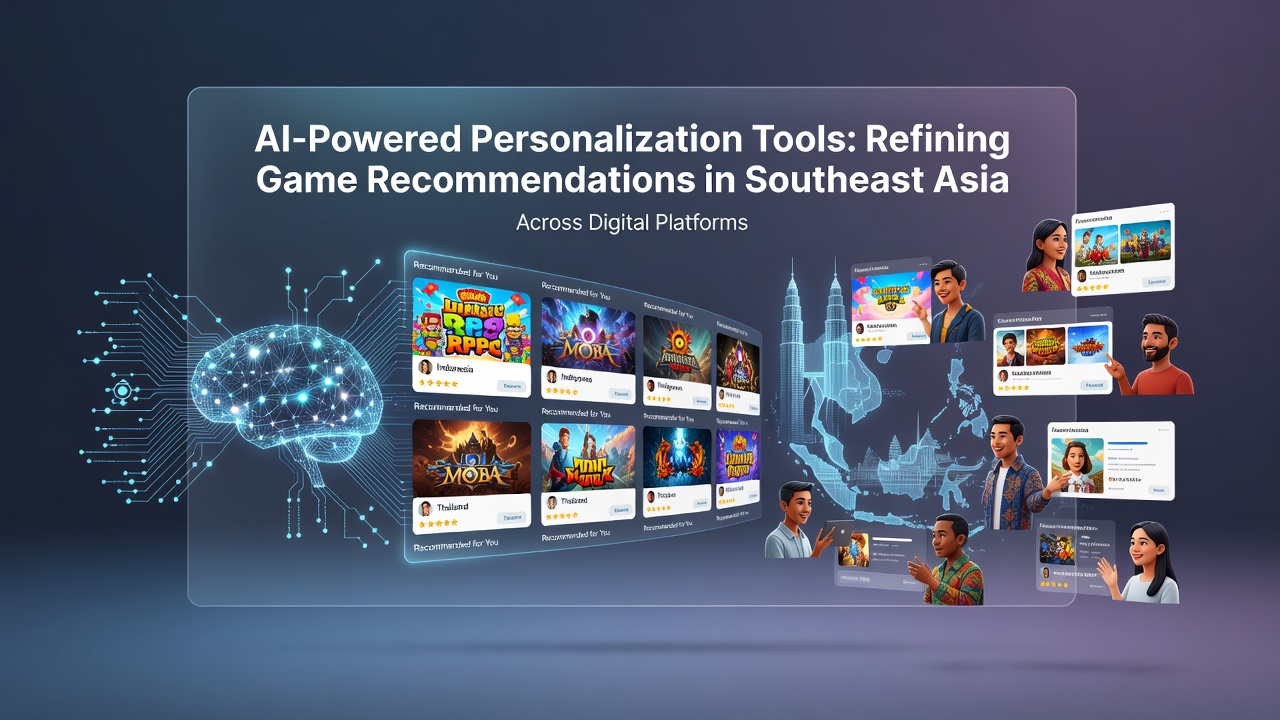
Digital platforms throughout Southeast Asia have integrated AI systems that analyze user behavior patterns to generate game recommendations, and these tools process vast datasets from millions of daily active users across countries including Indonesia, Thailand, Vietnam, and Malaysia. Data from industry reports shows that mobile gaming accounts for over 80 percent of digital entertainment consumption in the region, while personalization engines adjust suggestions in real time based on playtime duration, genre preferences, and social interactions. Researchers at institutions such as the National University of Singapore have documented how collaborative filtering and neural network models identify clusters of similar players, which allows platforms to surface titles that match individual profiles without manual curation.
Data Collection and Processing Methods
Platforms collect signals from in-app actions, device specifications, and session lengths, then feed this information into machine learning pipelines that run on cloud infrastructure hosted in regional data centers. According to figures from the ASEAN Digital Economy Report, gaming apps generated more than 45 billion downloads in 2025, and AI layers now refine output by weighting recent activity higher than historical data. Engineers deploy techniques such as reinforcement learning to test recommendation variants, where the system rewards suggestions that lead to longer engagement times and higher retention rates. These models operate continuously, updating every few hours as new user data arrives from markets where internet penetration has climbed past 75 percent in urban areas.
Platform Implementations in Key Markets
In Indonesia, major services have adopted content-based algorithms that pair users with games sharing visual styles or narrative elements from previously completed titles, and this approach has coincided with a 32 percent rise in average session length during 2026. Vietnamese platforms meanwhile combine location-based signals with demographic information to prioritize local-language titles alongside global releases, while Thai operators emphasize social graph data that links friends' play histories to generate group recommendations. Observers note that cross-border data sharing agreements among these platforms have expanded since mid-2025, allowing models trained on one market's patterns to improve accuracy in neighboring countries. October 2026 saw several providers roll out hybrid systems that blend rule-based filters with deep learning outputs, reducing irrelevant suggestions by an estimated 28 percent compared with earlier versions.
Impact on User Engagement and Retention
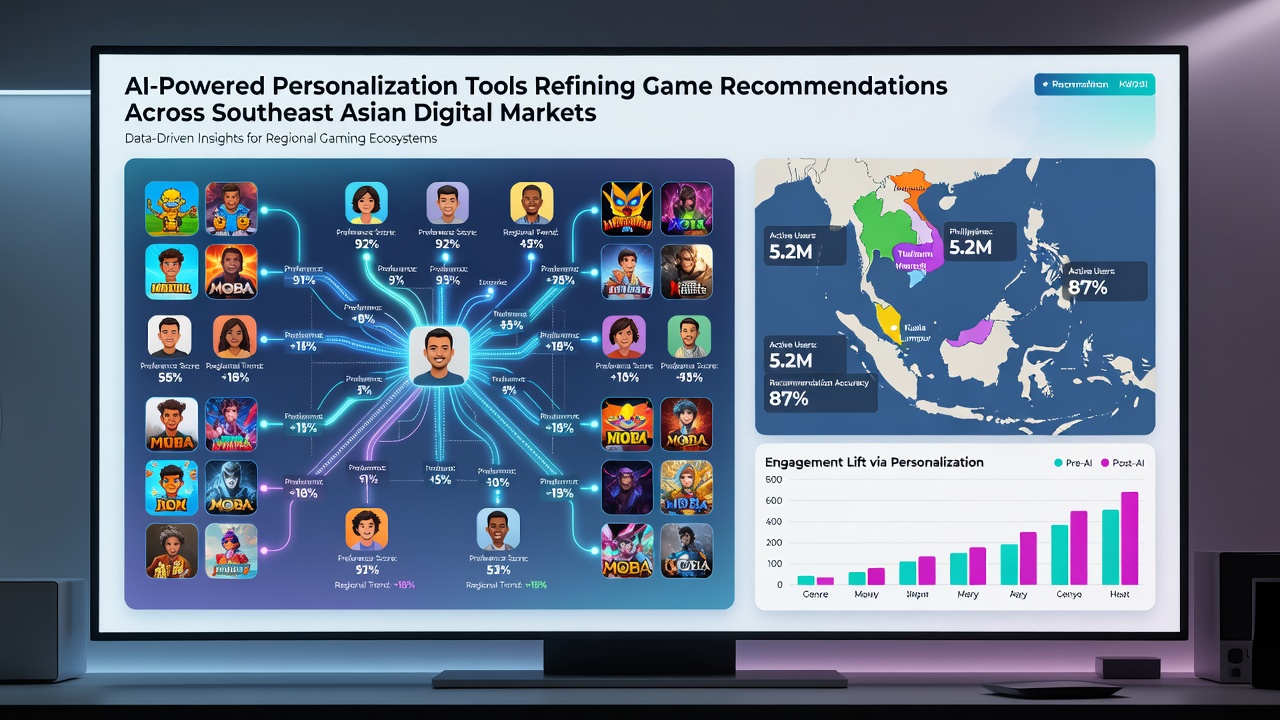
Studies conducted by regional analytics firms indicate that players who receive AI-curated lists complete 1.7 times more games per month than those viewing generic rankings, and conversion rates from free trials to paid subscriptions have increased across multiple services. The technology also supports discovery of niche titles that might otherwise remain buried in large catalogs exceeding 50,000 entries on some platforms. Yet implementation varies, with smaller developers relying on third-party AI services while larger operators maintain proprietary models trained on proprietary telemetry. Evidence from platform dashboards shared at industry events reveals that recommendation accuracy scores, measured by click-through rates, have climbed steadily since 2024 when initial large-scale deployments began.
Technical Challenges and Regional Adaptations
Latency remains a concern in areas with inconsistent connectivity, prompting engineers to shift some inference tasks to edge devices that process simplified models locally before syncing with central servers. Language diversity across Southeast Asia requires natural language processing layers that handle multiple scripts and dialects, and teams have incorporated transfer learning from high-resource languages to improve performance on less common ones. Privacy regulations in several jurisdictions mandate explicit consent for data usage, which has led platforms to offer granular controls that still feed anonymized aggregates into training sets. Partnerships with academic groups in Australia and Canada have supplied comparative datasets that help refine fairness metrics, ensuring recommendations do not disproportionately favor certain genres or demographics.
Future Developments and Industry Trends
Upcoming iterations are expected to incorporate multimodal inputs such as voice commands and gesture tracking, expanding the feature set beyond traditional clickstream analysis. Trade associations representing Southeast Asian tech firms have outlined roadmaps that target deeper integration with augmented reality games, where AI would suggest experiences based on physical surroundings detected through device sensors. Growth projections from market research groups point to continued expansion of these tools, driven by rising smartphone ownership and 5G network rollouts scheduled through 2027. Those tracking the sector observe that competition among platforms hinges increasingly on the sophistication of their personalization layers rather than catalog size alone.
Conclusion
AI personalization systems continue to reshape how games reach players on Southeast Asian digital platforms through iterative improvements in data handling, algorithmic design, and market-specific tuning. The documented outcomes include higher engagement metrics and broader discovery of content, supported by ongoing technical refinements that address connectivity and regulatory constraints across the region.